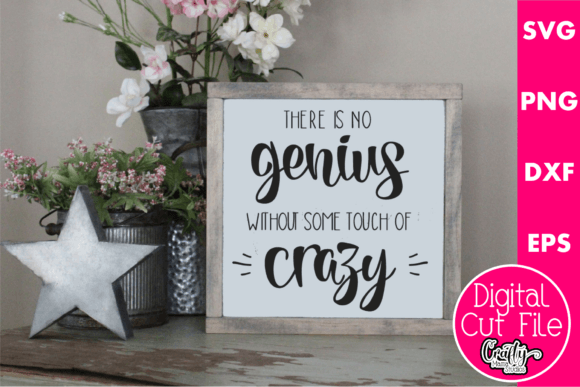
Reviewing There is No Genius Without Some Crazy
As a designer who has spent countless hours digitizing and testing embroidery files, I have learned that not every graphic translates well to thread. We often see bold, witty quotes in the digital Graphics space that look fantastic on a screen but become a nightmare under the needle. When I first encountered There is No Genius Without Some Crazy, my initial reaction was one of cautious optimism. The phrase itself carries a playful, intellectual energy that appeals to a wide demographic, from teachers and engineers to creative entrepreneurs. But does the design hold up when translated into a physical machine embroidery design? After putting it through its paces on various fabrics and hoop sizes, I am ready to share my practical assessment for fellow makers and Etsy sellers.
First Impressions and Visual Personality
The mood of this piece is undeniably confident. It balances humor with a touch of sophistication, making it ideal for projects that need to stand out without being overly loud. The layout appears clean, which is crucial for embroidery. In my experience, cluttered designs with too many tiny details often result in thread breaks or messy backs. This design seems to prioritize readability, which is essential when you are working with an embroidery file that needs to be legible from a distance. The visual personality suggests it belongs on items that are meant to be seen and discussed, such as a tote bag design for a book club or a statement piece on a sweatshirt embroidery project.
Real-World Application: The Custom Tote Test
To truly evaluate the utility of this design, I imagined a specific client scenario. A local boutique owner wanted a line of reusable canvas totes for a "Creative Minds" workshop series. She needed something that felt professional yet approachable. I selected There is No Genius Without Some Crazy for the prototype. Using a medium-weight canvas and a cut-away stabilizer, I ran the design in a 5x7 hoop. The result was impressive. The text remained crisp, and the spacing allowed the fabric texture to breathe. This is a critical point for anyone creating a handmade product; if the stitch density is too high, the fabric puckers. If it is too low, the backing shows through. This design seemed to strike a healthy balance, making it a strong candidate for a small shop product that needs to withstand frequent use.
Versatility Across Product Categories
One of the strongest assets of this quote is its adaptability. It fits seamlessly into several niches within the Crafts industry. For custom apparel, it works beautifully on the left chest of a denim jacket or across the back of a hoodie. For home decor, it translates well to a pillow cover or a kitchen towel, adding a dash of personality to everyday items. I also see potential in the gift market. As a personalized gift, it could be paired with a name or date for a graduation present or a birthday surprise for a quirky friend. The design’s inherent charm boosts the giftability factor, which is a key driver for buyer engagement on platforms like Etsy.
Considerations for Challenging Surfaces
While the design is versatile, it is not without its limitations. Embroiderers must exercise caution when applying it to certain materials. For instance, on stretchy fabrics like jersey knits, proper stabilization is non-negotiable. Without a tear-away or cut-away stabilizer, the letters may distort after washing. Similarly, on dark fabrics, you must consider thread colors carefully. A light thread on dark fabric requires a solid underlay to prevent the background from showing through the stitches. I recommend testing the design on scrap fabric first to check for any gaps in coverage. Additionally, if you are working with an applique design style, ensure that the fabric choice complements the thread rather than competing with it.
Technical Performance and Stitch Quality
From a technical standpoint, the clarity of the lettering is paramount. In embroidery, small serifs or intricate connections between letters can easily get lost. This design appears to use fonts that are robust enough to handle the thickness of embroidery thread. Whether using a satin stitch for smaller elements or a fill stitch for larger areas, the integrity of the shape must remain intact. I advise reviewing the stitch path in your software before loading it onto the machine. Look for excessive jumps or dense areas that might cause bunching. A well-digitized file will minimize these issues, ensuring a professional finish that builds customer trust. If the design includes any decorative accents, verify that they do not add unnecessary complexity that could lead to thread breaks.
Practical Designer Notes
- Test on Scrap Fabric: Always run a test stitch-out on the same type of fabric you plan to use for the final product. This helps you adjust tension and density.
- Check Thread Contrast: Ensure there is sufficient contrast between the thread and the fabric. Use a black and white mockup to verify readability.
- Review Stitch Density: High density can cause puckering, especially on lighter fabrics. Adjust if necessary based on your machine’s capabilities.
- Confirm Hoop Size: Make sure the design fits comfortably within your hoop, leaving enough margin for clamping and stability.
- Inspect Small Details: Zoom in on the digital file to check for any tiny elements that might not stitch out cleanly.
- Verify Licensing: Before selling finished items or digital products, confirm the license terms. Ensure you have the right to use the file for commercial embroidery projects.
Impact on Brand and Business Value
For craft business owners, the choice of design directly impacts brand perception. Using a high-quality, well-thought-out design like There is No Genius Without Some Crazy signals professionalism. It shows that you care about the details, from the choice of quote to the execution of the stitches. This attention to detail enhances brand consistency and can lead to higher customer retention. When customers receive a finished product that looks polished and durable, they are more likely to leave positive reviews and return for future purchases. Furthermore, having reliable design assets in your library allows you to scale your production efficiently, whether you are fulfilling orders for holiday embroidery gifts or everyday baby embroidery items.
Final Verdict for Makers and Sellers
In conclusion, There is No Genius Without Some Crazy is a strong contender for any embroiderer’s library. It offers a blend of wit and style that resonates with modern consumers. While it requires standard precautions regarding fabric choice and stabilization, its versatility makes it a valuable addition to your portfolio. Whether you are creating an embroidered patch for a local club or a custom cap for a corporate event, this design delivers. Just remember to check the specific file formats provided, such as SVG, EPS, DXF, and PNG, to ensure compatibility with your cutting machines or software if you are also using it for print-on-demand or vinyl projects. By approaching this design with a critical eye and a commitment to quality, you can create products that not only look great but also stand the test of time.