I Do This Thing Called Whatever I Want: A Designer's Review
As someone who has spent years navigating the intersection of digital Graphics and physical Crafts, I approach every new design file with a mix of excitement and skepticism. The market is flooded with generic assets, so finding a piece that truly resonates with the current maker culture requires a critical eye. Today, I am evaluating I Do This Thing Called Whatever I Want. On paper, the description promises versatility: an instant download vector file available in AI, EPS, SVG, and transparent PNG formats. But does it translate well from the screen to the stitch? Let’s dive into how this design performs in real-world embroidery scenarios.
First Impressions: Mood and Visual Personality
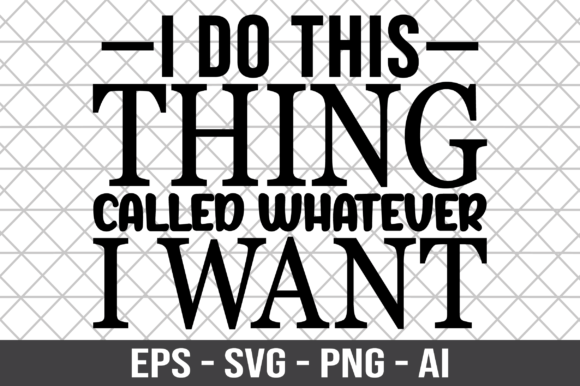
When I first opened the preview for I Do This Thing Called Whatever I Want, the immediate takeaway was its unapologetic attitude. In the world of handmade products, designs often lean toward the whimsical or the strictly decorative. This phrase breaks that mold. It carries a confident, slightly rebellious energy that speaks directly to the modern consumer who values self-expression. The typography likely drives the visual weight here, suggesting a layout that prioritizes readability and impact over intricate flourishes.
For an embroidery designer, this mood dictates the execution. You aren't looking at a delicate floral motif that requires microscopic detail; you are dealing with a statement piece. The shape and theme suggest a bold aesthetic that would sit comfortably on a canvas tote bag, a heavy cotton sweatshirt, or even a structured denim jacket. The visual personality is loud enough to stand alone as the focal point of a garment, yet flexible enough to be part of a larger collection. It feels like a design born from the need to create something authentic for the Etsy seller or boutique owner trying to connect with a younger, more spirited demographic.
Real-World Application: From File to Finished Product
To truly understand the value of I Do This Thing Called Whatever I Want, we have to move beyond the mockup and imagine the stitching process. Picture yourself preparing a custom embroidered tote bag for a local craft fair. You load the machine embroidery design into your hoop. Because the text is the primary element, the success of the project hinges on the balance between satin stitch and fill stitch.
In my experience, phrases like this work exceptionally well when the letters are filled with a dense, solid color to ensure legibility from a distance. If you were using this for a sweatshirt embroidery project, the fabric texture plays a crucial role. Fleece or French terry can sometimes swallow fine details, but a bold statement like "Whatever I Want" usually holds up well because the character shapes are substantial. The design’s simplicity means you don’t need to worry about tiny gaps where thread might pull through, which is a common issue with overly complex digital embroidery files.
Consider a holiday gift scenario. You are making personalized aprons for a group of friends. I Do This Thing Called Whatever I Want fits perfectly here. It transforms a standard kitchen item into a conversation starter. The transparency of the PNG file allows you to easily place the text over patterned fabrics without worrying about background clashes, provided you choose your thread colors wisely. High contrast is key. Imagine bright yellow thread on a black apron, or crisp white on a navy blue one. The design’s strength lies in its ability to pop against various backgrounds, making it a versatile asset for any craft business looking to expand their seasonal offerings.
Navigating Technical Challenges and Fabric Limitations
While the design is robust, it is not immune to the pitfalls of poor execution. As a reviewer, I must highlight where caution is required. If you attempt to shrink this design too much for a small hoop size, such as a 4x4 inch cap embroidery, the letterforms may lose their definition. Tiny lettering in embroidery is risky; the stitch density needs to be high enough to prevent the fabric from showing through, but low enough to avoid puckering.
Textured fabrics present another challenge. If you are working with linen or a heavy knit, the needle deflection can cause slight shifts in the text alignment. For I Do This Thing Called Whatever I Want, precision matters because the message is the product. I strongly advise testing the design on scrap fabric first. Check the back of the stitching to ensure the stabilizer choice was adequate. Without proper backing, the tension could distort the words, turning a confident statement into a wobbly mess.
Furthermore, consider the curvature of the surface. Embroidering on a baseball cap requires different settings than a flat pillow cover. The tight curves of a cap can compress the letters if the design isn't optimized for that specific area. While the vector nature of the AI and EPS files allows for resizing, simply scaling down doesn't automatically adjust the stitch count or underlay for a curved surface. Always review the stitch path before committing to a final run.
Strategic Value for Small Business Owners
For the small shop owner or creative entrepreneur, the true value of I Do This Thing Called Whatever I Want lies in its commercial potential. This isn't just a cute phrase; it is a brandable asset. When customers see this on a finished product, they aren't just buying a shirt; they are buying an identity. This boosts customer trust and engagement because the product feels curated and intentional.
The availability of multiple file formats—AI, EPS, SVG, and PNG—adds significant flexibility. You can use the vector files for professional resizing and editing within your design software, ensuring perfect proportions for large-scale applications like banners or wall hangings. The transparent PNG is invaluable for creating printable mockups to showcase your listings online. High-quality visuals drive sales, and having a clean, scalable image makes your Etsy storefront look polished and professional.
However, a word of caution regarding licensing. Before you list items made with this design for sale, confirm the license terms. Some commercial embroidery licenses restrict the number of items you can sell or require attribution. Ensure you are compliant to protect your business reputation. Once cleared, this design can become a staple in your inventory, appealing to anyone who wants to make a statement.
Final Verdict: Practical Design Judgment
I Do This Thing Called Whatever I Want is a strong contender for your next embroidery project. It strikes a balance between trendiness and timelessness, offering a clear visual hierarchy that translates well to thread. Whether you are creating a personalized gift for a friend or building a line of custom apparel for your shop, this design provides the punch needed to capture attention.
My recommendation is to treat it with respect. Don't rush the setup. Test your stabilizer, check your hoop size constraints, and play with thread colors to find the perfect contrast. If you take the time to execute it correctly, the result will be a high-quality, durable, and visually striking piece that stands out in a crowded market. It is a reminder that sometimes, the best design assets are the ones that let the message speak for itself, backed by solid craftsmanship.