Reviewing For God so Loved the World for Embroidery
As a designer who has spent countless hours digitizing and stitching out religious motifs, I approach every new machine embroidery design with a mix of curiosity and caution. Faith-based designs are a staple in the Crafts category, but they often suffer from poor spacing or illegible lettering when scaled down. When I first pulled up For God so Loved the World, my immediate concern was not just the aesthetic appeal, but its technical viability on actual fabric. This is not merely a digital asset; it is a blueprint for a tangible handmade product that needs to withstand washing, wearing, and close inspection.
First Impressions and Visual Mood
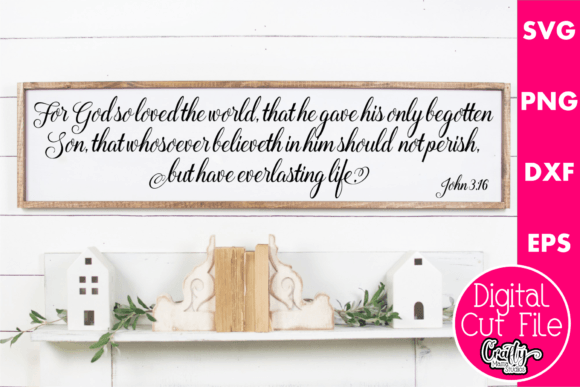
The phrase "For God so loved the world" carries significant weight, both spiritually and visually. In this specific embroidery file, the layout appears balanced, aiming to capture the reverence of John 3:16 without becoming overly ornate. The mood it creates is one of quiet confidence. It does not scream for attention with excessive flourishes but relies on the strength of the message. For an experienced eye, the clean lines suggest that this design could work well with a combination of satin stitch for borders or smaller text elements and fill stitch for larger, solid areas, provided the density is managed correctly.
What stands out initially is the versatility implied by the format. Since the download includes SVG, EPS, DXF, and PNG formats, this is clearly positioned as a multi-purpose asset. However, for those of us focused on needle and thread, the vector files (SVG, EPS, DXF) are primarily useful if you are creating cut-file hybrids or using them as references for manual digitizing. The true test lies in how the visual personality translates when converted into stitches. Does it retain its clarity? Does it look professional?
Real-World Application: The Tote Bag Test
To evaluate For God so Loved the World properly, I imagined a common scenario for many Etsy sellers and small shop product creators: a custom embroidered tote bag. Tote bags are popular for church groups, Bible studies, and personal daily use. They are made of canvas or heavy cotton, which provides a stable base for embroidery.
In this context, the design needs to be large enough to be readable from a distance but detailed enough to look high-quality up close. If I were stitching this onto a natural-colored canvas tote, I would likely choose a deep navy or burgundy thread to create strong contrast. The thread colors chosen here define the perceived value of the finished product. A cheap-looking thread choice can ruin even the best design. The simplicity of the quote allows it to sit centrally on the bag without overwhelming the fabric’s texture. It feels appropriate for a personalized gift that is meant to be used daily, reinforcing the message through utility.
Performance on Apparel and Curved Surfaces
Moving beyond flat surfaces, I considered how this design would perform on custom apparel, specifically a crewneck sweatshirt. Sweatshirts are thicker and have a pile, which can swallow small details. Here, the stitch density becomes critical. If the design relies on thin running stitch outlines, they might get lost in the fleece. However, if the design uses bolder strokes, it will pop nicely against the textured background.
Curved surfaces like caps present a different challenge. Embroidering on a cap requires a design that is not too wide, or it will distort around the curve. For God so Loved the World seems to have a horizontal orientation that might need careful placement on the front panel of a cap. I would advise testing a smaller version on a scrap piece of curved fabric first. If the letters are too close together, the threads may pull and cause puckering, especially on stretchy fabrics. Using a proper stabilizer is non-negotiable here to maintain the integrity of the embroidered patch or direct stitch-out.
Navigating Technical Constraints
While the design is inspiring, there are areas where caution is required. Small hoop sizes, such as 4x4 inches, may force you to shrink the design to fit. At reduced sizes, the legibility of the text "For God so Loved the World" could suffer. Tiny lettering is the enemy of clean embroidery. If the design includes intricate serifs or fine lines, they may break or merge during stitching. I recommend inspecting the design at 100% zoom on your screen before loading it into your machine software.
Additionally, consider the fabric type. On dark fabrics, light thread colors are essential for visibility, but they must be dense enough to cover the background fabric completely. On thin or stretchy fabrics, a heavy fill stitch can cause distortion. For these materials, consider using an applique design technique where the text is cut from felt or vinyl and stitched down, rather than filled entirely with thread. This reduces bulk and prevents puckering, making it ideal for baby embroidery items like onesies or burp cloths where comfort is paramount.
Commercial Viability and Brand Consistency
For commercial embroidery professionals and craft business owners, the consistency of the output is key to building customer trust. A sloppy stitch-out reflects poorly on your brand. For God so Loved the World offers a classic, timeless appeal that fits well within boutique branding for faith-based retailers. It enhances the giftability of items like pillow covers, kitchen towels, and holiday gifts.
When creating printable mockup previews for your online store, ensure that the digital representation matches the physical reality. Use high-quality design assets to show potential buyers how the design looks on various backgrounds. This transparency builds buyer engagement and reduces return rates. Remember, while the download includes various graphic formats, selling the digital file itself as an embroidery design may require specific licensing. Always confirm licensing terms before selling finished items or redistributing the digital files.
Practical Designer Notes
Before committing to a full production run or a client order, follow these practical steps:
- Test on Scrap Fabric: Always stitch out a sample on the same type of fabric you intend to use for the final product. This reveals issues with tension and density.
- Check Thread Contrast: View your design in black and white to ensure the shapes are distinct without color reliance. This helps in selecting the right thread colors for different fabric backgrounds.
- Verify Hoop Size: Ensure the design fits within your machine’s maximum hoop size without resizing it to the point of losing detail.
- Inspect Small Details: Zoom in on corners and curves. Sharp corners may need to be slightly rounded in the digitizing phase to prevent thread breaks.
- Confirm Licensing: Since this is a digital embroidery file intended for Cricut and other uses, verify if the license permits commercial sale of physical goods made with the design.
In conclusion, For God so Loved the World is a versatile addition to any designer’s library. It bridges the gap between spiritual sentiment and practical application. Whether used for a simple tote bag design or a complex holiday embroidery project, its success depends on thoughtful execution. By respecting the technical limitations of your machine and material, you can transform this Graphics asset into a meaningful, high-quality embroidery project that resonates with customers and honors the message it carries.